
Tag: custom stickers

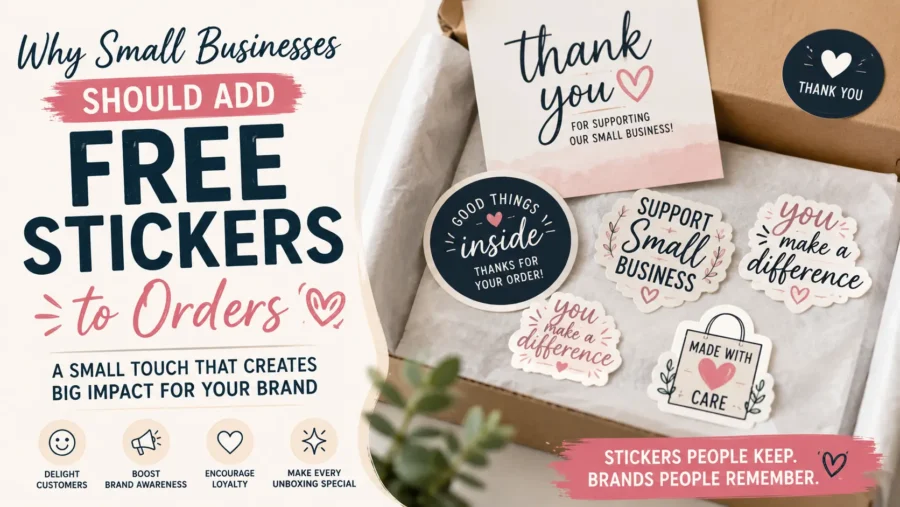
Why Small Businesses Should Add Free Stickers to Orders

TLDR

Adding free stickers to orders is a simple way for small businesses to make packages feel more personal, improve brand recall, and give customers something they may actually use.

The best free stickers are easy to keep, easy to share, and clearly connected to your brand. They do not need to be expensive or complicated. A small logo sticker, thank-you sticker, seasonal design, or sticker sheet can make an order feel more thoughtful.

For durable, polished stickers, businesses can order custom stickers instead of trying to print everything in-house.

The Small Extra That Makes an Order Feel Better

A customer opens a package expecting the item they paid for. Then they find a small sticker tucked inside.

That little extra can change the feel of the order. It says someone thought about the customer experience beyond packing the product and printing a shipping label. It also gives the customer something physical to keep, share, or place on a laptop, water bottle, notebook, phone case, tool box, mirror, or packaging station.

That is why small businesses should add free stickers to orders. A free sticker is not a grand gesture. It is a small, useful insert that can make your packaging feel more finished and your brand easier to remember.

It works especially well for brands with a strong visual style, loyal customers, niche communities, or repeat buyers. Artists, coffee roasters, candle makers, clothing brands, outdoor brands, pet shops, beauty brands, print shops, bakeries, makers, and ecommerce stores can all use stickers in a way that feels natural.

Free Stickers Make Packages Feel More Personal

Small businesses often compete against larger companies with bigger ad budgets, faster logistics, and lower prices. But small businesses can win in another area: personality.

A free sticker makes the package feel less transactional.

It can say:

  • “Thanks for supporting our small business.”
  • “Here’s a little something extra.”
  • “We’re glad this made it to you.”
  • “You’re part of the brand, not just the order number.”

This does not require a long handwritten note in every package. Those are nice, but they are not always realistic when orders grow. A sticker can carry a similar feeling at scale.

A simple thank-you sticker on tissue paper, a logo sticker inside the box, or a small branded sticker sheet can make the order feel prepared with care. Not overdone. Just considered.

And customers notice those details.

Stickers Help Customers Remember Your Brand

A package gets opened once. A sticker can stay around for months or years.

That is the main value.

When a customer puts your sticker on a laptop, water bottle, toolbox, notebook, bike, cooler, mirror, cash wrap, or shipping station, your brand keeps showing up after the order is complete. It becomes a small reminder of the purchase and the experience around it.

This is especially useful for brands that rely on repeat purchases.

A customer may forget the exact name of a candle shop, coffee roaster, soap maker, sticker brand, boutique, or small outdoor company. But if your logo or slogan is on a sticker they like, it keeps your business in their everyday space.

That kind of brand recall is hard to buy with ads alone.

The sticker needs to be good enough that someone wants to use it. That does not always mean complex art. It can be a clean logo, a funny phrase, a strong icon, or a design that fits your customer’s style.

Free Stickers Can Turn Customers Into Quiet Promoters

A good sticker travels.

It might end up on a water bottle at the gym, a laptop at school, a notebook at work, a car window, a skateboard, a cash register, or a hard case at a local market. That gives your brand a small public footprint without asking the customer to post anything, tag anyone, or write a review.

This matters because many customers do not want to feel like they are being pushed into promotion. A sticker is softer.

They can use it if they like it. They can ignore it if they do not. No pressure.

For the best chance of being used, the sticker should work even for someone who is not deeply familiar with your brand. A logo-only sticker can work if the logo is strong. But often, a sticker with a phrase, mascot, icon, product joke, local reference, or community message performs better.

For example:

  • A coffee brand could include a “Caffeinated and Trying” sticker.
  • A candle brand could include a “Burn After Reading” sticker.
  • A dog treat company could include a “Good Dog Approved” sticker.
  • A print shop could include a “Support Small Shops” sticker.
  • A fishing brand could include a simple trout or lake design.
  • A boutique could include a seasonal floral sticker.
  • A bakery could include a “Fresh Baked Happiness” sticker.

The sticker should feel like something the customer would pick up at a booth, not just a logo someone forced into the box.

Stickers Add Value Without Complicating Fulfillment

Small extras can become a mess if they are bulky, fragile, expensive, or hard to match to each order.

Stickers are easier.

They are flat. They are lightweight. They do not usually change shipping weight in a meaningful way. They are simple to store. They can be added to orders quickly. They can also be ordered in bulk once the design is settled.

That makes stickers a practical packaging insert for small teams.

A free sample may be more exciting, but it can add cost, inventory complexity, and product-specific planning. A discount card can help, but it may feel like another sales push. A sticker sits in a comfortable middle: it is a gift, a brand touchpoint, and a small piece of packaging all at once.

Not the flashiest part of fulfillment. But very useful.

What Kind of Free Stickers Should Small Businesses Include?

The right sticker depends on the business and the customer.

Here are a few reliable options.

Logo Stickers

Logo stickers are the simplest option. They work best when the logo is clean, readable, and visually strong.

Use logo stickers for:

  • Product boxes
  • Order inserts
  • Trade shows
  • Retail bags
  • Thank-you envelopes
  • Local events
  • Wholesale samples

A logo sticker is the safest starting point if you are ordering free stickers for the first time.

Thank-You Stickers

Thank-you stickers are warm and easy to use.

They can say:

  • “Thank you for supporting our small business.”
  • “Packed with care.”
  • “A little thank-you from our team.”
  • “Made for you.”
  • “Thanks for your order.”

These work well on tissue paper, envelopes, product wrapping, or inside the package as a small freebie. They can also help make simple packaging feel more complete.

Branded Phrase Stickers

These are often more usable than logo-only stickers because they give the customer a reason to display the sticker.

Think about what your customers already say, feel, or joke about.

A plant shop might use “Just One More Plant.”
A coffee brand might use “Coffee First.”
A dog brand might use “My Dog Deserves This.”
A craft brand might use “Made by Hand.”
A car brand might use “Built, Not Bought.”

The phrase should connect to the customer, not just the business.

Seasonal Stickers

Seasonal stickers are useful for holiday orders, limited drops, events, and product launches.

Examples include:

  • Valentine’s Day stickers
  • Halloween stickers
  • Christmas packaging stickers
  • Summer drop stickers
  • Market booth stickers
  • Anniversary sale stickers
  • New product launch stickers

These are good because they create variety. Repeat customers do not keep receiving the same insert every time.

Sticker Sheets

Sticker sheets are a strong choice when you want to include several small designs at once.

A sticker sheet can include:

  • A logo
  • A thank-you message
  • A product icon
  • A QR code
  • A seasonal graphic
  • A small mascot
  • A discount code sticker
  • A care instruction sticker

For brands with multiple designs, custom sticker sheets can be useful because several stickers can fit on one backing sheet. That makes the insert feel more substantial without needing several loose stickers in the package.

How to Design Stickers Customers Actually Keep

A free sticker only works if the customer likes it enough to use it.

Start with the customer’s taste, not just your brand board. Your colors, logo, and typefaces matter, but the sticker needs to fit into the customer’s life.

Good free stickers tend to be:

  • Simple
  • Readable
  • Durable
  • Easy to peel
  • Not too large
  • Not too small
  • Connected to the brand
  • Attractive without feeling overdesigned

A two- to three-inch sticker is a good general size for most inserts. It is large enough to notice but small enough for laptops, bottles, notebooks, and mailers.

For artwork, avoid tiny text, low-resolution files, and overly detailed designs. A sticker may look fine on a screen but feel cramped in person. Print the design at actual size before ordering. If you cannot read it at arm’s length, simplify it.

Where to Place Free Stickers in the Order

You can include free stickers in a few ways.

Place one loose sticker inside the box or mailer. This feels like a true freebie.

Use a thank-you sticker to seal tissue paper or glassine bags. This improves the package presentation and still gives the customer a branded detail.

Attach a sticker to a thank-you card. This makes the insert feel intentional and keeps the sticker from sliding around.

Add a sticker sheet to higher-value orders. This can make larger purchases feel more rewarding.

Include different stickers for repeat customers. This keeps the experience fresh and gives customers a reason to collect them.

You do not need to overthink the placement. Just make sure the sticker is protected, clean, and easy to find.

A Simple Free Sticker Strategy for Small Businesses

Start small.

You do not need ten sticker designs on day one. A simple system is better.

Try this:

  1. Create one core logo sticker.
  2. Create one thank-you sticker.
  3. Create one fun customer-facing sticker.
  4. Add one sticker to every order.
  5. Add two or three stickers to larger orders.
  6. Rotate seasonal designs every few months.
  7. Watch what customers post, mention, or reorder.

This gives you enough variety without making fulfillment harder.

You can also use stickers as small rewards:

  • First order: logo sticker
  • Repeat order: alternate design
  • Large order: sticker sheet
  • Holiday order: seasonal sticker
  • Wholesale order: branded packaging stickers
  • Event order: limited design

The goal is not to bury customers in random inserts. The goal is to make the package feel a little more thoughtful.

Why Professional Stickers Are Better Than Cheap Inserts

A free sticker represents the brand. If it feels flimsy, blurry, or hard to peel, it does not help much.

For some uses, home-printed stickers are fine. They can work for testing, prototypes, or very small local batches. But for customer orders, professional stickers usually feel better and last longer.

Durable vinyl stickers are especially useful because customers may place them on water bottles, laptops, phone cases, coolers, notebooks, cars, or work surfaces. A sticker that fades, scratches, or peels quickly can make the brand feel less polished.

That is why small businesses often use a sticker printer like CustomStickers.com for order inserts. Their custom vinyl stickers are designed for full-color printing, custom shapes, and everyday use, which makes them a practical option for branded freebies.

Common Mistakes to Avoid

The biggest mistake is making a sticker that only the business owner likes.

A sticker should feel useful or appealing to the customer. It should not be treated like a tiny ad with too much text.

Avoid these mistakes:

  • Using a design that is too detailed
  • Making the sticker too large for common surfaces
  • Adding too many calls to action
  • Printing low-resolution artwork
  • Using thin text that disappears
  • Sending the same sticker forever
  • Including a sticker that does not match the product or audience
  • Using cheap materials for a brand that wants to feel polished
  • Forgetting to test the sticker at actual size

Also be careful with QR codes. They can be useful, but they should not take over the design. If the goal is a free gift, make the sticker feel like a gift first.

FAQs

Should Small Businesses Include Free Stickers in Every Order?

Yes, if the sticker fits the brand and the cost works for the business. A small sticker can make the package feel more personal and give customers something useful to keep.

What Size Should Free Order Stickers Be?

A two- to three-inch sticker is a good starting size. It is large enough to show the design but small enough for laptops, water bottles, notebooks, phone cases, and packaging.

Are Logo Stickers or Fun Stickers Better?

Both can work. Logo stickers are simple and good for brand recognition. Fun phrase stickers or illustrated stickers are often more likely to be used because they feel less like advertising.

Should I Use Sticker Sheets as Freebies?

Sticker sheets work well for higher-value orders, kids’ products, creative brands, stationery shops, subscription boxes, and brands with several small icons or designs.

Can Free Stickers Help With Repeat Customers?

They can help, but they are not a complete retention strategy by themselves. Free stickers work best when the product is good, the packaging is clean, and the customer experience already feels solid.

Where Can I Order Freebie Stickers for My Business?

You can order custom freebie stickers from a professional printer like CustomStickers.com. Custom vinyl stickers are a good fit for durable branded inserts, while sticker sheets work well when you want to include multiple small designs.

Conclusion

Free stickers are a small detail, but they can do useful work for a small business.

They make orders feel more personal. They help customers remember the brand. They give people something easy to use, share, and keep. They can also make simple packaging feel more complete without adding much complexity to fulfillment.

The best approach is simple: design a sticker your customer would actually want, print it well, and include it in the order in a way that feels natural.

A free sticker will not fix a weak product or poor service. But when the product is good, it can make the whole order feel a little better. And that is usually worth doing.
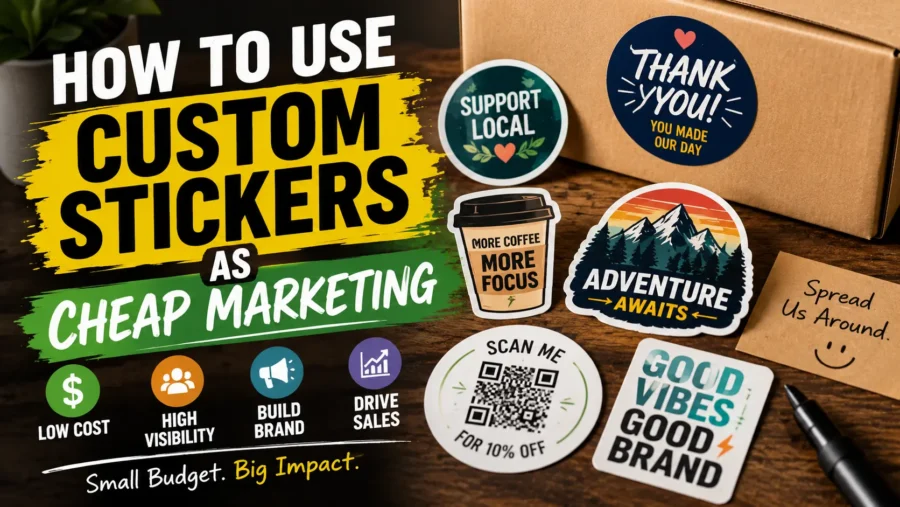
How To Use Custom Stickers As Cheap Marketing

TLDR

Custom stickers work well as cheap marketing because they are small, useful, easy to hand out, and simple to add to packaging, events, local promos, and customer orders. The best sticker marketing ideas are not random freebies. They connect to a clear goal: brand awareness, repeat purchases, referrals, social follows, reviews, or local visibility.

Start with a simple design, a clear message, and one easy next step. Then use stickers in places customers already touch: packaging, receipts, bags, laptops, bottles, mailers, storefronts, events, and product displays.

Introduction

Most small businesses do not have money to waste on ads that disappear the second the budget turns off. That is why cheap marketing has to work a little harder. It needs to be memorable, easy to use, and tied to a real customer action.

That is where learning how to use custom stickers as cheap marketing makes sense. Stickers are simple, but they can do a lot of jobs. They can turn plain packaging into branded packaging. They can make a customer order feel more personal. They can put your logo on a laptop, water bottle, hard hat, cooler, notebook, car window, or checkout counter. And with the right design, they can give people a small reason to remember your business.

The trick is not just ordering logo stickers and hoping people use them. That can work, but it leaves a lot on the table. A better approach is to treat custom stickers like tiny marketing pieces with a purpose. Some should build brand awareness. Some should promote a discount. Some should send people to a landing page. Some should make your packaging look more finished without paying for custom boxes.

Here is how to use custom stickers as cheap marketing without making them feel cheap.

Why Custom Stickers Work For Low-Cost Marketing

Stickers work because people understand them instantly. There is no learning curve. No app to download. No account to create. A sticker can be handed out, packed into an order, placed on a product, stuck to a bag, or given away at an event.

They also last longer than many one-time marketing pieces. A social post may get buried. A flyer may get tossed. A sticker that someone actually likes can stay on a laptop or bottle for months. That is not guaranteed, of course. A boring sticker still becomes clutter. But a useful, funny, attractive, or well-branded sticker has a better shot at sticking around.

Custom stickers are also flexible. A coffee shop can use them as cup seals. A boutique can add them to shopping bags. A lawn care company can hand out weatherproof logo stickers. A creator can sell sticker packs. A local service business can add a QR code sticker to estimate folders, magnets, or leave-behind cards.

For small businesses, that flexibility is the point. You are not locked into one campaign style.

Start With One Marketing Goal

Before designing anything, decide what the sticker is supposed to do.

A custom sticker can help with several marketing goals, but one sticker should usually focus on one main job. If you try to make it do everything, it gets crowded fast.

Common sticker marketing goals include:

  • building brand awareness
  • encouraging repeat purchases
  • driving traffic to a website
  • promoting a local event
  • getting more reviews
  • encouraging social follows
  • making packaging feel more polished
  • turning customers into small brand advocates
  • adding a coupon or referral offer
  • making products easier to recognize

A logo sticker is good for brand awareness. A QR code sticker is good for traffic, reviews, menus, or signups. A packaging sticker is good for presentation. A funny brand sticker is good for shareability. A coupon sticker is good for repeat purchases.

That sounds obvious, but it matters. The goal changes the design.

Use Logo Stickers For Simple Brand Awareness

Logo stickers are the most basic form of sticker marketing, and they still work when the logo is clean and recognizable.

The best logo stickers are simple. They use strong contrast, readable text, and a shape that fits the brand. A coffee shop might use a round logo sticker. A mechanic might use a bold rectangle or shield shape. An outdoor brand might use a die-cut mountain logo. A bakery might use a soft oval or circle.

Logo stickers work well as:

  • checkout freebies
  • thank-you inserts
  • laptop stickers
  • water bottle stickers
  • event table giveaways
  • order packaging extras
  • local business cross-promos

The mistake is printing a tiny, detailed logo with text nobody can read. If the sticker is smaller than three inches, simplify the design. Remove the tagline if needed. Use a strong icon. Make the business name readable from at least a few feet away.

A sticker that looks good from across a room is usually better marketing than one that only looks good up close.

Turn Packaging Into Advertising

Packaging is one of the easiest places to use custom stickers as cheap marketing because you are already sending the package, bag, box, or product to the customer.

A sticker can make plain packaging look branded without paying for custom-printed boxes, bags, or mailers. That is useful for small businesses, Etsy sellers, local shops, subscription boxes, bakeries, candle brands, soap makers, coffee roasters, and online stores.

Good packaging sticker ideas include:

  • logo seals for tissue paper
  • thank-you stickers on mailers
  • product label stickers
  • “made locally” stickers
  • seasonal packaging stickers
  • reorder QR code stickers
  • care instruction stickers
  • batch number or flavor stickers
  • small “packed by” stickers

This is where stickers and labels can overlap. Individual stickers are great for inserts, handouts, and freebies. Roll labels are often better when you need to label lots of jars, bottles, boxes, bags, or product containers quickly. YouStickers has both custom stickers and custom labels, which makes it easier to choose based on the actual job.

The practical rule is simple: use stickers when people will receive them individually. Use labels when you need a cleaner packaging workflow.

Add QR Code Stickers With A Real Reason To Scan

QR code stickers can be very useful, but only when the scan leads somewhere worthwhile.

Do not put a QR code on a sticker just because it feels modern. Give people a reason to scan it.

Good QR code sticker destinations include:

  • a reorder page
  • a review page
  • a discount landing page
  • a menu
  • a booking page
  • a loyalty signup
  • a product care guide
  • a video tutorial
  • a social profile
  • a giveaway entry page

For example, a coffee brand could add a QR sticker that says “Scan for 10% off your next bag.” A detail shop could use a sticker that says “Scan to book your next wash.” A candle brand could add “Scan for burn care tips.” A local restaurant could place a QR sticker on takeout bags that points to the online ordering page.

The sticker should make the next step clear. “Scan me” is weak. “Scan for reorder discount” is better. “Scan to book your next appointment” is better still.

Also, test the code before printing. Make sure the QR code is large enough, high contrast, and linked to a mobile-friendly page. A QR code sticker that does not scan is not marketing. It is just a small square of regret.

Use Stickers As Customer Giveaways

Giveaway stickers work best when people would actually want to use them.

That does not always mean putting your logo front and center. In many cases, a sticker based on your customer’s identity or interest will get more use than a plain logo.

A gym could print stickers that say “Earned, Not Given.” A plant shop could make “Proud Plant Parent” stickers. A coffee shop could use “Fueled By Cold Brew.” A dog groomer could make breed-themed stickers. A bike shop could print trail, mountain, or local landmark stickers.

The business can still be present, but it should not overpower the design. A small logo or website on the edge is often enough.

Here is a good test: would someone put this on their water bottle if they did not own the business?

If the answer is no, revise the design.

Create Sticker Offers That Bring People Back

Stickers can also work as low-cost coupon cards, especially for local businesses.

A sticker coupon feels a little more fun than a plain paper coupon. It can go on a receipt, takeout bag, box, drink sleeve, product package, or checkout counter.

Simple sticker offer ideas:

  • “Bring this back for 10% off”
  • “Scan for your next order discount”
  • “Free drink with your next visit”
  • “Show this sticker for a small bonus”
  • “Refer a friend and both save”
  • “Collect five stickers, get a reward”

For restaurants, coffee shops, salons, fitness studios, local retailers, and service businesses, this can create a simple repeat-visit loop.

Just keep the offer clear. Do not bury the details in tiny text. If there are conditions, make them simple. A confusing offer usually gets ignored.

Use Stickers For Events, Markets, And Pop-Ups

Events are a natural fit for sticker marketing because people are already collecting small items, talking to vendors, and carrying bags.

At a farmers market, art fair, trade show, school event, car meet, festival, or pop-up shop, stickers give people something to take with them. They also make your booth look more active.

Good event sticker ideas include:

  • logo stickers
  • local landmark stickers
  • event-only stickers
  • limited colorway stickers
  • QR code stickers for signups
  • “I visited” stickers
  • product category stickers
  • funny niche stickers tied to your audience

Limited designs can work well here. A sticker that says “Spring Market 2026” or “Park City Coffee Run” feels tied to a moment. People like items that feel specific.

The key is to put the sticker somewhere easy to grab. Do not make people ask unless the sticker is part of a conversation. A small bowl, tray, or sign that says “Take One” is enough.

Partner With Other Local Businesses

One of the cheapest ways to stretch a sticker campaign is to share it with another business that serves a similar audience.

A coffee shop and a bookstore can create a shared sticker. A gym and a smoothie shop can cross-promote. A dog groomer and a pet supply store can team up. A local brewery and food truck can create a limited sticker for a weekend event.

The design should make sense for both businesses. It should not look like two logos fighting for space.

A good local collaboration sticker might include:

  • one shared theme
  • both logos in small form
  • a location name
  • a date or campaign name
  • a QR code to a landing page or offer

Local sticker marketing works because it feels more personal than a generic ad. It also gives both businesses something to post online and hand out in person.

Make Stickers Easy To Share On Social Media

Custom stickers can help with social content, but the sticker needs to be photogenic or connected to a reason to post.

For example, a restaurant could create a sticker wall. A boutique could include a seasonal sticker in every order and ask customers to tag the shop. A creator could sell sticker packs and encourage collectors to share where they placed them. A gym could use stickers as milestone rewards.

Good social sticker prompts include:

  • “Tag us where you stick it”
  • “Show us your bottle”
  • “Post your sticker wall”
  • “Collect the full set”
  • “Share your setup”
  • “Vote for next month’s design”

Keep the ask small. Customers are not your marketing department. But some people enjoy sharing if the sticker is genuinely fun or visually interesting.

Choose The Right Sticker Type For The Campaign

Not every marketing sticker needs the same format.

Here is a simple guide:

Marketing UseBest Sticker TypeWhy It Works
Handouts and freebiesDie-cut vinyl stickersEasy to give away and more memorable than a plain square
Packaging sealsRoll labels or kiss-cut stickersFaster to apply and clean on boxes, bags, or tissue
QR code campaignsSquare or rectangle stickersGives the code and call-to-action room to breathe
Outdoor promosLaminated vinyl or bumper stickersBetter for cars, tools, coolers, windows, and equipment
Product packagingRoll labelsEasier for repeated application on jars, bottles, bags, and boxes
Artist merchSticker sheets or sticker packsLets customers get multiple designs at once
Premium promosHolographic or specialty stickersAdds visual interest when the design supports it

For most small business marketing, vinyl stickers are the safe all-around choice. They work for handouts, packaging inserts, laptops, bottles, and general branding. Roll labels make more sense when speed and repeated application matter.

Keep The Design Simple

A cheap marketing sticker should not look rushed. It should look clear.

That usually means fewer elements, stronger contrast, and one obvious message. Small stickers do not have much space for extra copy.

A good sticker design usually includes:

  • a clear logo, icon, or phrase
  • readable text
  • strong color contrast
  • one main message
  • enough white space
  • a simple border or cutline
  • a website, handle, or QR code if needed

Avoid tiny taglines, thin fonts, crowded layouts, low-resolution artwork, and complicated backgrounds behind text. Those details may look fine on a large screen and then fall apart in print.

The best small business sticker designs are often the simplest ones.

Track The Campaign So You Know What Worked

Cheap marketing is still marketing. It should be measured.

You do not need a complicated dashboard, but you should track enough to know if the campaign was worth repeating.

Simple ways to track sticker marketing:

  • use a unique QR code
  • create a sticker-only discount code
  • use a landing page for the campaign
  • ask customers how they heard about you
  • count redeemed stickers or coupons
  • compare repeat orders before and after the campaign
  • track event signups from a sticker QR code

Even rough tracking is better than guessing. If a sticker campaign gets repeat orders, review scans, social tags, or local attention, you can print more. If it does nothing, adjust the design, offer, placement, or audience.

A Simple Sticker Marketing Plan For Small Businesses

Here is a practical starter plan.

First, print one brand sticker. Keep it clean, readable, and easy to use on a laptop or water bottle.

Second, print one packaging sticker. Use it on every order, bag, box, or mailer.

Third, print one action sticker. This could be a QR code for reviews, reorders, social follows, or a discount.

Fourth, test the stickers for 30 to 60 days. Track redemptions, scans, customer comments, and social posts.

Fifth, reorder the winner and retire the one that does not work.

This keeps the campaign simple. It also prevents the common mistake of ordering ten designs before knowing what customers actually respond to.

Common Mistakes To Avoid

Do not make the sticker only about you. A giant logo can work for strong brands, but many small businesses get better use from designs customers actually want to display.

Do not make the text too small. If people need to squint, the sticker is doing too much.

Do not use weak contrast. Light gray on white may look clean on screen, but it is usually a bad idea for small printed marketing.

Do not send every sticker to the same place. Packaging stickers, event stickers, coupon stickers, and QR code stickers should have different jobs.

Do not skip the proof. A proof gives you a chance to catch sizing, cutline, spacing, and layout issues before printing. That small review step matters.

Conclusion

Custom stickers can be cheap marketing, but they work best when they are treated like a real campaign. Give each sticker one job. Make the design clear. Put the sticker where customers already interact with your brand. Then track what happens.

A small sticker can build awareness, improve packaging, promote an offer, start a conversation, or bring someone back to your website. It does not need to be complicated. It just needs to be useful, readable, and tied to a next step.

For small businesses, that is the real value. Custom stickers are easy to test, easy to hand out, and easy to repeat when something works.

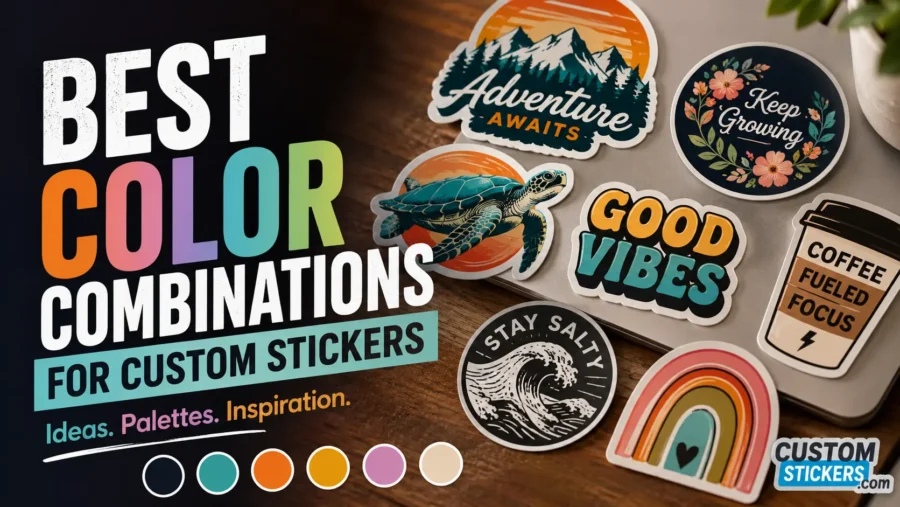
Best Color Combinations For Custom Stickers

TLDR

The best color combinations for custom stickers usually have strong contrast, a simple palette, and a clear job. Black and white works almost anywhere. Navy and cream feels polished. Teal and orange pops. Pastels work well for soft branding, but they need darker text or a strong outline. For small stickers, readability matters more than using every brand color at once.

Introduction

A sticker only gets a second or two to do its job. It might be on a laptop, a water bottle, a shipping box, a car window, or a product label. If the colors are too close together, the design can disappear before anyone has a chance to care.

That is why the best color combinations for custom stickers are not just “pretty.” They are practical. A good sticker color palette makes the artwork easy to read, easy to recognize, and easy to remember. The right mix of contrast, brand colors, background color, and finish can make a simple design feel much more intentional.

Color also changes depending on where the sticker goes. A cream sticker on a white bottle may look too soft. A black sticker on a tinted car window may not have enough edge. A neon palette can look great for a gym bottle but feel loud on luxury packaging. None of these choices are automatically wrong. They just need to match the sticker’s purpose.

Here are the best color combinations for custom stickers, plus simple ways to choose the right palette for your design.

Start With Contrast Before Picking Colors

The first rule is simple: people need to see the design.

Contrast is the difference between light and dark areas in your sticker design. It matters even more than hue. Red and green may be different colors, but if both are the same brightness, they can blur together at small sizes. Navy and white, on the other hand, are easy to read because the light-dark contrast is strong.

For sticker design, contrast affects:

  • text readability
  • logo visibility
  • QR code scanning
  • product label clarity
  • how well the sticker stands out from the surface behind it

A good quick test is to turn the design grayscale. If the main text, logo, or icon still stands out, the color combination probably has enough value contrast. If everything turns into the same middle gray, the sticker may need a lighter background, darker text, a bolder outline, or fewer colors.

This is especially important for small custom stickers. A 2-inch logo sticker does not have much room to recover from weak contrast.

Best High-Contrast Color Combinations For Custom Stickers

High-contrast palettes are the safest choice when the sticker needs to be read quickly. These work well for brand stickers, event stickers, warning labels, packaging seals, QR code stickers, and laptop decals.

Black And White

Black and white is the most reliable sticker color combination. It works because the contrast is obvious, the design stays clean, and the palette does not fight with the surface.

Use black and white for:

  • logo stickers
  • minimal brand decals
  • QR code stickers
  • typography stickers
  • product seals
  • monochrome artwork

The tradeoff is personality. Black and white can look polished, but it can also feel plain if the artwork itself is not strong. If the design feels too flat, add one accent color.

Good accent options include red, cobalt blue, lime green, metallic gold, or warm beige.

Navy And Cream

Navy and cream is a great choice when black and white feels too stark. It has enough contrast for readability but feels softer and more refined.

This palette works well for:

  • coffee brands
  • candle labels
  • wedding stickers
  • stationery brands
  • boutique packaging
  • outdoor brands that want a classic feel

Navy also prints with a rich, dependable look. Cream adds warmth without going full yellow. Just make sure the cream is not too close to white if the sticker will be used on white packaging.

Red And White

Red and white is bold, fast, and easy to notice. It works well when you want the sticker to feel urgent, energetic, or promotional.

Use red and white for:

  • sale stickers
  • event badges
  • food packaging
  • sports stickers
  • limited-edition drops
  • callout labels

The main caution is category meaning. Red can feel exciting, but it can also suggest warning, heat, error, or urgency. That can be perfect for hot sauce. It may not be right for a calming skincare label.

Yellow And Black

Yellow and black is one of the strongest high-visibility combinations. It reads quickly and works well from a distance.

Use yellow and black for:

  • safety-style stickers
  • gym stickers
  • tool stickers
  • garage decals
  • bold event stickers
  • playful warning labels

This palette is not subtle. That is the point. Use it when attention matters more than softness.

Royal Blue And White

Royal blue and white feels bright, clean, and dependable. It is a strong option for business stickers, tech brands, school stickers, and service companies.

Use this palette when you want something more colorful than black and white, but still easy to read. It also works nicely on clear stickers if white ink is used behind the blue or white areas where needed.

Best Bright Color Combinations That Pop

Bright color combinations are useful when the sticker needs to stand out on a crowded laptop, cooler, bottle, or product display. The trick is to control the palette. Bright does not mean every color should compete at once.

Teal And Orange

Teal and orange is a classic complementary color combination. The colors sit across from each other on the color wheel, so they create natural contrast.

This palette works well for:

  • outdoor stickers
  • surf and beach designs
  • summer product packaging
  • brewery stickers
  • coffee shop merch
  • event giveaways

For a cleaner look, use deep teal as the main color and orange as the accent. For a louder design, reverse it and use orange as the background.

Purple And Yellow

Purple and yellow can feel playful, creative, and eye-catching. It works well for art brands, party stickers, school stickers, music events, and youth-focused products.

The key is choosing the right shades. Deep violet with soft butter yellow feels polished. Bright purple with bright yellow feels much louder. Both can work, but they do different jobs.

A simple formula:

  • deep purple background
  • warm yellow headline or icon
  • white or cream secondary text

That keeps the design readable without making it look chaotic.

Hot Pink And Black

Hot pink and black is bold, modern, and hard to miss. It works well for stickers with attitude: fashion brands, beauty brands, band stickers, pop culture designs, and personal laptop decals.

The risk is that it can feel harsh if both colors are too heavy. Give the layout enough breathing room. Use black for structure and hot pink for impact.

Lime Green And Navy

Lime green and navy is a strong choice for fitness brands, tech brands, gaming stickers, and modern product packaging. Navy keeps the palette grounded. Lime green gives it energy.

This is a good example of a bright color combination that still feels controlled. It is colorful, but not messy.

Best Soft And Pastel Sticker Color Palettes

Pastels can look friendly, handmade, calm, or cheerful. They are great for stickers that need a lighter touch. But pastel palettes need extra care because low contrast can make small text hard to read.

Blush Pink And Cream

Blush pink and cream works well for beauty brands, bakery stickers, bridal stickers, and handmade product packaging. It feels soft and personal.

But avoid cream text on blush if the sticker includes small details. Use charcoal, deep brown, burgundy, or dark rose for the text.

A good version:

  • blush pink background
  • deep brown or burgundy text
  • cream border or small accents

Mint Green And White

Mint green and white is clean, fresh, and light. It works well for wellness brands, spring stickers, skincare labels, and food packaging.

The issue is contrast. White text on mint green often looks nice on screen but becomes faint in print. A better version is mint green with dark green, charcoal, navy, or deep teal text.

Lavender And Deep Purple

Lavender and deep purple is one of the best soft color combinations because it keeps the gentle pastel feel while adding enough contrast. It works for stationery, bookish stickers, event stickers, and creative brands.

Use lavender as the base and deep purple for the message. Add white only as an accent, not as the main text color.

Peach And Forest Green

Peach and forest green feels warm, fresh, and slightly earthy. It is a strong fit for plant shops, markets, soap brands, coffee packaging, and boutique product labels.

This palette works because peach brings warmth while forest green adds contrast and structure.

Best Color Combinations For Brand Stickers

Brand stickers need more discipline than personal stickers. A random palette may look fun, but it can weaken recognition if it does not connect back to the brand.

For brand stickers, start with your primary brand color. Then choose one of these supporting structures.

Primary Brand Color Plus White

This is the cleanest option. Use your main brand color as the background and white for the logo or text.

Best for:

  • simple logo decals
  • packaging stickers
  • thank-you stickers
  • event handouts
  • product inserts

This works especially well when your brand color is dark or saturated, such as navy, forest green, burgundy, black, or royal blue.

Primary Brand Color Plus Neutral Plus Accent

This is often the best setup for marketing stickers. Use the brand color for recognition, a neutral for readability, and one accent color for emphasis.

Example:

  • navy background
  • cream text
  • orange “new” badge

Or:

  • forest green background
  • white logo
  • gold accent line

This lets the sticker feel branded without looking flat.

Monochrome Brand Palette

A monochrome palette uses different tints and shades of one color. It can look very polished, especially for premium packaging, wedding stickers, and minimalist brands.

Examples:

  • deep green, sage, pale mint
  • burgundy, dusty rose, blush
  • navy, slate blue, pale blue
  • charcoal, gray, silver

The tradeoff is contrast. Monochrome palettes need one clearly dark shade and one clearly light shade, or the sticker can become hard to read.

Best Color Combinations By Sticker Use

The best palette depends on where the sticker will go. Here are practical combinations by use case.

Sticker UseStrong Color CombinationsWhy It Works
Laptop stickersBlack and white, hot pink and black, teal and orangeStands out on silver, black, and colored laptop cases
Water bottle stickersNavy and white, teal and orange, lime green and navyReads well on curved surfaces and mixed bottle colors
Car stickersWhite and black, silver and black, red and whiteWorks from a distance and holds up visually on glass or paint
Product packagingNavy and cream, forest green and peach, blush and burgundyFeels intentional without overpowering the packaging
Event stickersPurple and yellow, red and white, royal blue and whiteEasy to notice and remember
Soap or candle labelsCream and brown, sage and ivory, charcoal and blushSofter palettes fit handmade and giftable products
Gym stickersYellow and black, lime and navy, red and whiteHigh energy and easy to spot
Coffee stickersEspresso brown and cream, navy and tan, burnt orange and creamWarm, grounded, and easy to brand

How Sticker Material Changes Color Choices

Color combinations do not exist in isolation. Sticker material and finish can change how the final design feels.

Gloss stickers usually make colors feel brighter and sharper. They are a good fit for bold artwork, bright brand stickers, and designs that need shine.

Matte stickers reduce glare and can make designs feel softer. They work well for packaging, labels, wedding stickers, and more understated brand designs.

Clear stickers need extra planning. Light colors may disappear on dark surfaces or look different depending on what is behind them. If the design needs to stay true, ask about white ink or a white underbase.

Holographic stickers add movement and shine, but they can compete with low-contrast artwork. Use bold shapes, darker outlines, and fewer colors so the design does not get lost.

For easy ordering, proofing, and custom sticker options, CustomStickers.com is a strong place to start. A proof can help catch issues like weak contrast, unclear edges, or colors that may not work as expected before the order goes to print.

Simple Rules For Choosing A Sticker Color Palette

Here is a practical way to choose colors without overthinking it.

First, choose the sticker’s job. Is it supposed to promote, decorate, label, warn, seal, thank, or brand?

Second, choose one main color. This should carry most of the design.

Third, choose one contrast color. This is usually for text, icons, or the main logo.

Fourth, choose one accent color. Use it sparingly for highlights, borders, small badges, or calls to action.

A reliable sticker palette usually has:

  • 1 main color
  • 1 readable text color
  • 1 accent color
  • 1 optional neutral

That is enough. In most cases, five or six colors is where sticker designs start to feel busy, especially at smaller sizes.

Common Color Mistakes To Avoid

The biggest mistake is using colors that look different but have the same brightness. This creates weak contrast. The design may look fine up close, but it becomes hard to read on a bottle, laptop, or package.

Another mistake is using too many accent colors. If every part of the design is trying to stand out, nothing stands out.

Also be careful with white text on light colors. White on pastel pink, mint, yellow, or sky blue can look clean on a bright screen but weak in print.

Avoid relying only on color to communicate important information. If a sticker has a size, flavor, warning, or QR code instruction, use text, icons, borders, or layout hierarchy too.

And check the surface. A sticker for a black laptop may need different colors than a sticker for a white shipping box.

FAQs

What color combination is best for readable custom stickers?

Black and white is usually the most readable. Navy and cream, royal blue and white, yellow and black, and red and white are also strong choices. For small text, use a very light color against a very dark color, or a very dark color against a very light color.

What colors make stickers stand out the most?

High-contrast combinations stand out the most. Teal and orange, yellow and black, hot pink and black, purple and yellow, and lime green and navy all create strong visual impact. Use these when attention matters.

Are pastel colors good for custom stickers?

Pastel colors can work very well, especially for soft branding, gifts, stationery, beauty products, and handmade packaging. Just avoid pairing pastel backgrounds with white or very light text. Add a darker text color or outline for readability.

Should custom stickers use brand colors?

Yes, if the sticker represents a business. Use your primary brand color for recognition, then add a neutral or accent color for readability. A sticker does not need to use every brand color at once.

What colors work best for clear stickers?

Clear stickers usually work best with bold, dark colors, white ink, or strong outlines. Very light colors may disappear depending on the surface. Always think about where the clear sticker will be applied before choosing the palette.

How many colors should a sticker design have?

Most sticker designs work best with two to four colors. A main color, a text color, an accent color, and a neutral is usually enough. More colors can work for illustration-heavy designs, but they need clear hierarchy.

Conclusion

The best color combinations for custom stickers are the ones that match the job. A bold event sticker needs a different palette than a soft candle label. A laptop decal has different needs than a clear product sticker. That is why contrast, surface color, finish, and brand style all matter.

Start simple. Pick one main color, one readable contrast color, and one accent. Then test the design small, in grayscale, and on the surface where the sticker will actually live. That small check can prevent a lot of disappointing prints.

A good sticker does not need a complicated palette. It needs a clear one.

Powered by WordPress & Theme by Anders Norén