
Tag: packaging inserts

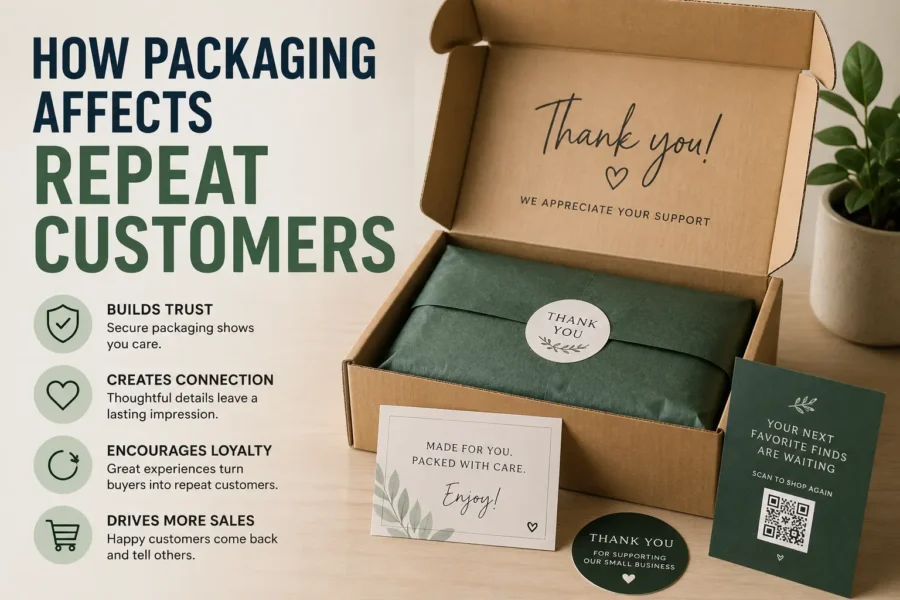
How Packaging Affects Repeat Customers

TLDR

Packaging affects repeat customers because it shapes how buyers feel after the sale, not just before it.

A clean, protected, well-branded package can make an order feel more trustworthy and more memorable. Poor packaging does the opposite. It can make the product feel cheaper, create doubt, and give customers a reason to try another brand next time.

The goal is not to make every order look expensive. The goal is to make every order feel cared for, easy to open, and worth buying again.

How Packaging Affects Repeat Customers

A customer does not decide how they feel about your brand when they click “buy.” That decision keeps forming while they wait for the order, open the package, inspect the product, and decide whether the experience matched what they expected.

That is why packaging affects repeat customers more than many small businesses realize. The package is the first physical proof that your brand can follow through. The ad, website, product photos, and checkout process all made a promise. Packaging is where the customer starts deciding if that promise was real.

Good packaging does not need to be complicated. A sturdy mailer, clean product label, branded sticker, and thoughtful insert can make a basic order feel polished. But the details need to work together. If the item arrives damaged, the label is peeling, or the box looks messy inside, the customer may still like the product but hesitate before ordering again.

Repeat customers are built through trust. Packaging is one of the easiest places to either strengthen that trust or lose it.

Packaging Is Part of the Product Experience

For ecommerce brands, packaging is often the first in-person interaction a customer has with the business.

They cannot hold the product before buying. They cannot walk through your store. They cannot talk to a person at the counter. The shipped order has to do more work.

That means packaging is not just a shipping tool. It is part of the product experience.

It tells the customer:

  • How carefully the product was handled
  • Whether the brand pays attention to details
  • Whether the item feels giftable or retail-ready
  • Whether the business seems organized
  • Whether the purchase was worth the price

This matters even for simple products. A sticker order in a rigid mailer with a clean thank-you card feels different from the same stickers tossed loosely into a plain envelope. A candle with a crisp label and protective wrap feels different from one with a smudged label and loose filler.

The product may be identical. The customer’s confidence may not be.

Protection Comes First

A premium-looking package means very little if the product arrives damaged.

Protection is the foundation of repeat customer packaging. It is not the flashiest part, but it is the part customers remember when it fails.

A customer who receives a bent print, cracked jar, leaking bottle, or crushed box now has a problem to solve. They may have to take photos, email support, wait for a replacement, or decide whether the product is still usable. Even if your support team handles it well, the customer has already had a worse experience than expected.

Protective packaging should match the product:

  • Flat prints, photos, and decals need rigid mailers or backing boards.
  • Glass jars and candles need snug boxes, padding, and movement control.
  • Apparel needs clean folding and moisture protection.
  • Stickers and labels need protection from bending, scuffing, and moisture.
  • Food and bath products need packaging that prevents leaks, odor transfer, and mess.

The point is not to overpack everything. It is to prevent the problems your product is most likely to face during shipping.

A repeat customer should feel safe ordering again. If the first order arrives in good condition, that confidence grows.

Clean Presentation Makes the Brand Feel More Reliable

Packaging does not need to be fancy to feel premium. It needs to feel intentional.

Clean presentation can be as simple as:

  • A correctly sized box or mailer
  • Tissue paper folded neatly
  • A sticker seal placed straight
  • Product labels applied evenly
  • A thank-you card on top
  • Packing slips tucked to the side
  • No loose scraps, dust, or clutter inside the package

These are small details, but they send a clear message: this order was packed by someone who cared.

That feeling matters because customers often connect packaging quality with product quality. If the package feels careless, they may wonder what else was careless. If the package feels organized, they are more likely to trust the product before they even use it.

This is especially important for small businesses trying to earn a second order. A first-time customer has less history with your brand. Packaging can help fill that trust gap.

Branded Packaging Helps Customers Remember You

Repeat purchases require memory.

That sounds simple, but it is easy to overlook. A customer may love a product and still forget where they bought it, especially if they shop from many small brands, marketplaces, or social media shops.

Branded packaging helps your business stay attached to the product in the customer’s mind.

You do not need a custom printed box to do this. A few consistent branded details can work well:

  • A logo sticker on tissue paper
  • A branded product label
  • A thank-you card with your website
  • A reorder QR code
  • A small freebie sticker
  • A care card with your brand name
  • A clean return or support card

For small packaging upgrades, YouStickers is a practical place to start because custom stickers and labels can be used across mailers, boxes, product packaging, inserts, and freebies. Stickers work well for packaging seals and giveaways. Labels are better for jars, bottles, boxes, and product packaging that needs a cleaner applied finish.

The key is consistency. Use the same logo, colors, label style, and tone across the package. That makes the order easier to recognize and easier to remember.

Packaging Inserts Can Encourage a Second Order

Packaging inserts are useful because they reach the customer at a high-attention moment.

They just opened the order. They are looking at the product. They are deciding how they feel about the purchase. That is a better moment to ask for a review, share a discount, explain product care, or introduce a related product.

But inserts need to be useful. Too many cards can feel like clutter.

Good packaging inserts include:

  • A thank-you card
  • A first-order discount for the next purchase
  • A product care card
  • A referral card
  • A review request
  • A QR code to reorder
  • A sample card for a related product
  • A setup or usage guide

The best insert depends on the product.

A candle brand might include a care card that explains wick trimming and burn time. A coffee brand might include a brew guide. A sticker brand might include an extra sample sticker and a note about where to reorder. A skincare brand might include usage instructions and a reminder to patch test.

A good insert makes the order easier to enjoy. A great insert makes the next purchase feel obvious.

Freebies Can Help, But Only When They Make Sense

Freebies are popular because they create a small moment of surprise.

That surprise can help customers feel appreciated. It can also make the order feel like a better value. But freebies should be connected to the purchase.

A random freebie may be ignored. A useful freebie may be remembered.

Good freebie examples:

  • A bonus sticker in a sticker order
  • A small sample scent with a candle order
  • A mini recipe card with spices or food products
  • A small care tool with jewelry or apparel
  • A printed mini art card with an art order
  • A label sample for business customers ordering packaging supplies

Freebies should not create confusion. Customers should know why the item is there and what to do with it.

A small branded sticker is one of the simplest options because it can work as a gift, brand reminder, and marketing touch all at once.

Bad Packaging Can Push Customers Away

Packaging can help retention, but it can also hurt it.

Customers may not always leave a review about bad packaging. They may just decide not to order again.

Common packaging problems include:

  • Products arriving damaged
  • Packaging that feels excessive or wasteful
  • Hard-to-open mailers or boxes
  • Leaking bottles or jars
  • Crooked or peeling labels
  • Unclear product names or variants
  • Missing instructions
  • Too many promotional inserts
  • Packaging that looks much cheaper than the product price
  • Branded boxes that draw unwanted attention to valuable items

That last point matters. Branded packaging can be useful, but it is not always the right choice for the outside of the package. For some products, a plain outer mailer with branded details inside is better. It still gives the customer a nice unboxing experience without making the package too obvious during delivery.

Good packaging should reduce friction. If it creates more problems, it is not helping repeat purchases.

Sustainability Can Affect Whether Customers Come Back

Customers do not all care about packaging sustainability in the same way. Some care a lot. Some mainly care about damage, price, or convenience. But excessive packaging is becoming harder to ignore.

A package that feels wasteful can leave a bad impression, especially if the product itself is positioned as handmade, natural, thoughtful, local, or premium.

That does not mean every business needs expensive compostable packaging right away. It does mean packaging should feel reasonable.

Practical steps include:

  • Use the right size mailer or box.
  • Avoid unnecessary filler.
  • Choose recyclable materials when they fit the product.
  • Use one strong branded insert instead of several weak ones.
  • Make packaging easy to separate and dispose of.
  • Do not add decorative layers that serve no purpose.

Sustainable packaging is still a tradeoff. Some materials cost more. Some do not protect as well. Some sound better than they perform. The best approach is to choose packaging that protects the product, avoids obvious waste, and matches customer expectations.

Packaging Should Match the Price Point

Customers judge packaging against what they paid.

A $12 item does not need the same packaging as a $120 item. But the packaging should still feel appropriate.

For lower-priced products, clean and simple is usually enough. A branded sticker, neat wrap, and thank-you card can carry the experience.

For higher-priced products, customers may expect more:

  • Better internal protection
  • More polished product labels
  • Cleaner inserts
  • Sturdier boxes
  • More careful presentation
  • Clearer support or care information

This is not about pretending a product is luxury. It is about making the packaging feel aligned with the value of the purchase.

When packaging feels far below the price point, customers may question the purchase. When it feels aligned, they are more likely to feel good about buying again.

Build a Packaging System for Repeat Customers

The best packaging system is repeatable.

If your team has to make too many decisions for every order, the experience will vary. Some packages will look great. Others will look rushed. That inconsistency can hurt customer trust.

A simple packaging system should define:

  • Which mailer or box goes with each product type
  • How the product is wrapped
  • Where the label goes
  • Which insert goes in the package
  • Whether a freebie is included
  • Where the packing slip goes
  • How the package is sealed
  • What to check before shipping

This does not need to be complicated. A one-page checklist is often enough.

The goal is to make every customer feel like they got the “good version” of your packaging, not just the customers who happened to order on a slow day.

How to Measure Whether Packaging Is Helping Retention

Packaging can feel subjective, but there are ways to measure whether it is helping.

Watch for signals like:

  • Repeat purchase rate
  • Product review mentions
  • Customer support tickets about damage
  • Refund or replacement requests
  • Social media tags and unboxing posts
  • Customer comments about presentation
  • Discount code use from packaging inserts
  • QR code scans from reorder cards
  • Customer lifetime value over time

You do not need a complicated dashboard to start. Read reviews. Track damage complaints. Ask customers one simple post-purchase question: “How was your order when it arrived?”

If customers regularly mention the packaging in a positive way, you are probably doing something right. If they mention damage, waste, confusion, or missing instructions, that is your next fix.

Practical Packaging Upgrades That Can Increase Repeat Orders

If you want to improve packaging without changing everything, start with the parts customers see and touch first.

Good first upgrades include:

  • Better product labels
  • A branded packaging sticker
  • A short thank-you card
  • A product care card
  • More protective inner packaging
  • A reorder QR code
  • Cleaner tissue or paper wrap
  • A small freebie tied to the order
  • A better-fitting mailer or box

Start small. Test one or two changes. Then watch customer feedback and repeat purchase behavior.

The best packaging upgrades are not always the most expensive ones. They are the ones that make the order feel easier to trust, easier to use, and easier to remember.

Final Thoughts

Packaging affects repeat customers because it shapes the customer’s memory of the purchase.

A strong product matters most, but packaging controls the first physical impression. It can make the product feel protected, polished, personal, and worth buying again. Or it can make the customer wonder if the brand is as reliable as it looked online.

For most small businesses, the right move is simple: protect the product, clean up the presentation, add one or two branded details, and make the next step easy.

That is enough to make a first order feel better. And a better first order gives customers one more reason to come back.
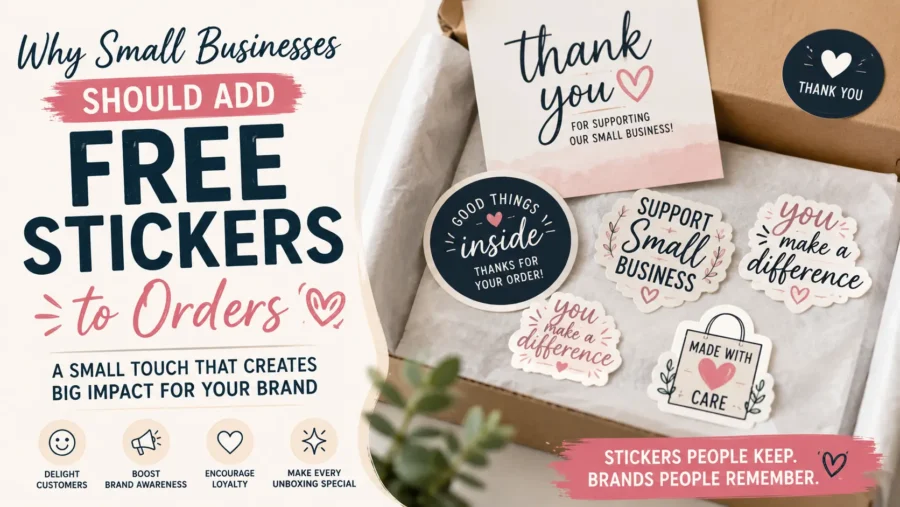
Why Small Businesses Should Add Free Stickers to Orders

TLDR

Adding free stickers to orders is a simple way for small businesses to make packages feel more personal, improve brand recall, and give customers something they may actually use.

The best free stickers are easy to keep, easy to share, and clearly connected to your brand. They do not need to be expensive or complicated. A small logo sticker, thank-you sticker, seasonal design, or sticker sheet can make an order feel more thoughtful.

For durable, polished stickers, businesses can order custom stickers instead of trying to print everything in-house.

The Small Extra That Makes an Order Feel Better

A customer opens a package expecting the item they paid for. Then they find a small sticker tucked inside.

That little extra can change the feel of the order. It says someone thought about the customer experience beyond packing the product and printing a shipping label. It also gives the customer something physical to keep, share, or place on a laptop, water bottle, notebook, phone case, tool box, mirror, or packaging station.

That is why small businesses should add free stickers to orders. A free sticker is not a grand gesture. It is a small, useful insert that can make your packaging feel more finished and your brand easier to remember.

It works especially well for brands with a strong visual style, loyal customers, niche communities, or repeat buyers. Artists, coffee roasters, candle makers, clothing brands, outdoor brands, pet shops, beauty brands, print shops, bakeries, makers, and ecommerce stores can all use stickers in a way that feels natural.

Free Stickers Make Packages Feel More Personal

Small businesses often compete against larger companies with bigger ad budgets, faster logistics, and lower prices. But small businesses can win in another area: personality.

A free sticker makes the package feel less transactional.

It can say:

  • “Thanks for supporting our small business.”
  • “Here’s a little something extra.”
  • “We’re glad this made it to you.”
  • “You’re part of the brand, not just the order number.”

This does not require a long handwritten note in every package. Those are nice, but they are not always realistic when orders grow. A sticker can carry a similar feeling at scale.

A simple thank-you sticker on tissue paper, a logo sticker inside the box, or a small branded sticker sheet can make the order feel prepared with care. Not overdone. Just considered.

And customers notice those details.

Stickers Help Customers Remember Your Brand

A package gets opened once. A sticker can stay around for months or years.

That is the main value.

When a customer puts your sticker on a laptop, water bottle, toolbox, notebook, bike, cooler, mirror, cash wrap, or shipping station, your brand keeps showing up after the order is complete. It becomes a small reminder of the purchase and the experience around it.

This is especially useful for brands that rely on repeat purchases.

A customer may forget the exact name of a candle shop, coffee roaster, soap maker, sticker brand, boutique, or small outdoor company. But if your logo or slogan is on a sticker they like, it keeps your business in their everyday space.

That kind of brand recall is hard to buy with ads alone.

The sticker needs to be good enough that someone wants to use it. That does not always mean complex art. It can be a clean logo, a funny phrase, a strong icon, or a design that fits your customer’s style.

Free Stickers Can Turn Customers Into Quiet Promoters

A good sticker travels.

It might end up on a water bottle at the gym, a laptop at school, a notebook at work, a car window, a skateboard, a cash register, or a hard case at a local market. That gives your brand a small public footprint without asking the customer to post anything, tag anyone, or write a review.

This matters because many customers do not want to feel like they are being pushed into promotion. A sticker is softer.

They can use it if they like it. They can ignore it if they do not. No pressure.

For the best chance of being used, the sticker should work even for someone who is not deeply familiar with your brand. A logo-only sticker can work if the logo is strong. But often, a sticker with a phrase, mascot, icon, product joke, local reference, or community message performs better.

For example:

  • A coffee brand could include a “Caffeinated and Trying” sticker.
  • A candle brand could include a “Burn After Reading” sticker.
  • A dog treat company could include a “Good Dog Approved” sticker.
  • A print shop could include a “Support Small Shops” sticker.
  • A fishing brand could include a simple trout or lake design.
  • A boutique could include a seasonal floral sticker.
  • A bakery could include a “Fresh Baked Happiness” sticker.

The sticker should feel like something the customer would pick up at a booth, not just a logo someone forced into the box.

Stickers Add Value Without Complicating Fulfillment

Small extras can become a mess if they are bulky, fragile, expensive, or hard to match to each order.

Stickers are easier.

They are flat. They are lightweight. They do not usually change shipping weight in a meaningful way. They are simple to store. They can be added to orders quickly. They can also be ordered in bulk once the design is settled.

That makes stickers a practical packaging insert for small teams.

A free sample may be more exciting, but it can add cost, inventory complexity, and product-specific planning. A discount card can help, but it may feel like another sales push. A sticker sits in a comfortable middle: it is a gift, a brand touchpoint, and a small piece of packaging all at once.

Not the flashiest part of fulfillment. But very useful.

What Kind of Free Stickers Should Small Businesses Include?

The right sticker depends on the business and the customer.

Here are a few reliable options.

Logo Stickers

Logo stickers are the simplest option. They work best when the logo is clean, readable, and visually strong.

Use logo stickers for:

  • Product boxes
  • Order inserts
  • Trade shows
  • Retail bags
  • Thank-you envelopes
  • Local events
  • Wholesale samples

A logo sticker is the safest starting point if you are ordering free stickers for the first time.

Thank-You Stickers

Thank-you stickers are warm and easy to use.

They can say:

  • “Thank you for supporting our small business.”
  • “Packed with care.”
  • “A little thank-you from our team.”
  • “Made for you.”
  • “Thanks for your order.”

These work well on tissue paper, envelopes, product wrapping, or inside the package as a small freebie. They can also help make simple packaging feel more complete.

Branded Phrase Stickers

These are often more usable than logo-only stickers because they give the customer a reason to display the sticker.

Think about what your customers already say, feel, or joke about.

A plant shop might use “Just One More Plant.”
A coffee brand might use “Coffee First.”
A dog brand might use “My Dog Deserves This.”
A craft brand might use “Made by Hand.”
A car brand might use “Built, Not Bought.”

The phrase should connect to the customer, not just the business.

Seasonal Stickers

Seasonal stickers are useful for holiday orders, limited drops, events, and product launches.

Examples include:

  • Valentine’s Day stickers
  • Halloween stickers
  • Christmas packaging stickers
  • Summer drop stickers
  • Market booth stickers
  • Anniversary sale stickers
  • New product launch stickers

These are good because they create variety. Repeat customers do not keep receiving the same insert every time.

Sticker Sheets

Sticker sheets are a strong choice when you want to include several small designs at once.

A sticker sheet can include:

  • A logo
  • A thank-you message
  • A product icon
  • A QR code
  • A seasonal graphic
  • A small mascot
  • A discount code sticker
  • A care instruction sticker

For brands with multiple designs, custom sticker sheets can be useful because several stickers can fit on one backing sheet. That makes the insert feel more substantial without needing several loose stickers in the package.

How to Design Stickers Customers Actually Keep

A free sticker only works if the customer likes it enough to use it.

Start with the customer’s taste, not just your brand board. Your colors, logo, and typefaces matter, but the sticker needs to fit into the customer’s life.

Good free stickers tend to be:

  • Simple
  • Readable
  • Durable
  • Easy to peel
  • Not too large
  • Not too small
  • Connected to the brand
  • Attractive without feeling overdesigned

A two- to three-inch sticker is a good general size for most inserts. It is large enough to notice but small enough for laptops, bottles, notebooks, and mailers.

For artwork, avoid tiny text, low-resolution files, and overly detailed designs. A sticker may look fine on a screen but feel cramped in person. Print the design at actual size before ordering. If you cannot read it at arm’s length, simplify it.

Where to Place Free Stickers in the Order

You can include free stickers in a few ways.

Place one loose sticker inside the box or mailer. This feels like a true freebie.

Use a thank-you sticker to seal tissue paper or glassine bags. This improves the package presentation and still gives the customer a branded detail.

Attach a sticker to a thank-you card. This makes the insert feel intentional and keeps the sticker from sliding around.

Add a sticker sheet to higher-value orders. This can make larger purchases feel more rewarding.

Include different stickers for repeat customers. This keeps the experience fresh and gives customers a reason to collect them.

You do not need to overthink the placement. Just make sure the sticker is protected, clean, and easy to find.

A Simple Free Sticker Strategy for Small Businesses

Start small.

You do not need ten sticker designs on day one. A simple system is better.

Try this:

  1. Create one core logo sticker.
  2. Create one thank-you sticker.
  3. Create one fun customer-facing sticker.
  4. Add one sticker to every order.
  5. Add two or three stickers to larger orders.
  6. Rotate seasonal designs every few months.
  7. Watch what customers post, mention, or reorder.

This gives you enough variety without making fulfillment harder.

You can also use stickers as small rewards:

  • First order: logo sticker
  • Repeat order: alternate design
  • Large order: sticker sheet
  • Holiday order: seasonal sticker
  • Wholesale order: branded packaging stickers
  • Event order: limited design

The goal is not to bury customers in random inserts. The goal is to make the package feel a little more thoughtful.

Why Professional Stickers Are Better Than Cheap Inserts

A free sticker represents the brand. If it feels flimsy, blurry, or hard to peel, it does not help much.

For some uses, home-printed stickers are fine. They can work for testing, prototypes, or very small local batches. But for customer orders, professional stickers usually feel better and last longer.

Durable vinyl stickers are especially useful because customers may place them on water bottles, laptops, phone cases, coolers, notebooks, cars, or work surfaces. A sticker that fades, scratches, or peels quickly can make the brand feel less polished.

That is why small businesses often use a sticker printer like CustomStickers.com for order inserts. Their custom vinyl stickers are designed for full-color printing, custom shapes, and everyday use, which makes them a practical option for branded freebies.

Common Mistakes to Avoid

The biggest mistake is making a sticker that only the business owner likes.

A sticker should feel useful or appealing to the customer. It should not be treated like a tiny ad with too much text.

Avoid these mistakes:

  • Using a design that is too detailed
  • Making the sticker too large for common surfaces
  • Adding too many calls to action
  • Printing low-resolution artwork
  • Using thin text that disappears
  • Sending the same sticker forever
  • Including a sticker that does not match the product or audience
  • Using cheap materials for a brand that wants to feel polished
  • Forgetting to test the sticker at actual size

Also be careful with QR codes. They can be useful, but they should not take over the design. If the goal is a free gift, make the sticker feel like a gift first.

FAQs

Should Small Businesses Include Free Stickers in Every Order?

Yes, if the sticker fits the brand and the cost works for the business. A small sticker can make the package feel more personal and give customers something useful to keep.

What Size Should Free Order Stickers Be?

A two- to three-inch sticker is a good starting size. It is large enough to show the design but small enough for laptops, water bottles, notebooks, phone cases, and packaging.

Are Logo Stickers or Fun Stickers Better?

Both can work. Logo stickers are simple and good for brand recognition. Fun phrase stickers or illustrated stickers are often more likely to be used because they feel less like advertising.

Should I Use Sticker Sheets as Freebies?

Sticker sheets work well for higher-value orders, kids’ products, creative brands, stationery shops, subscription boxes, and brands with several small icons or designs.

Can Free Stickers Help With Repeat Customers?

They can help, but they are not a complete retention strategy by themselves. Free stickers work best when the product is good, the packaging is clean, and the customer experience already feels solid.

Where Can I Order Freebie Stickers for My Business?

You can order custom freebie stickers from a professional printer like CustomStickers.com. Custom vinyl stickers are a good fit for durable branded inserts, while sticker sheets work well when you want to include multiple small designs.

Conclusion

Free stickers are a small detail, but they can do useful work for a small business.

They make orders feel more personal. They help customers remember the brand. They give people something easy to use, share, and keep. They can also make simple packaging feel more complete without adding much complexity to fulfillment.

The best approach is simple: design a sticker your customer would actually want, print it well, and include it in the order in a way that feels natural.

A free sticker will not fix a weak product or poor service. But when the product is good, it can make the whole order feel a little better. And that is usually worth doing.

Powered by WordPress & Theme by Anders Norén